Why Good Badminton Players Look Calm (And Why Most Club Players Don't)
Watch any professional badminton match. Viktor Axelsen glides across the court. Tai Tzu-ying seems to have all the time in the world. They never look rushed. They never look panicked.
Now watch a typical club game. Players are scrambling. They are gasping for air after three rallies. Every shot looks like an emergency.
What's the difference? Is it fitness? Genetics? A $300 racket?
The answer is simpler—and more frustrating—than you might think. Good players look calm because they are early. Club players look panicked because they are late.
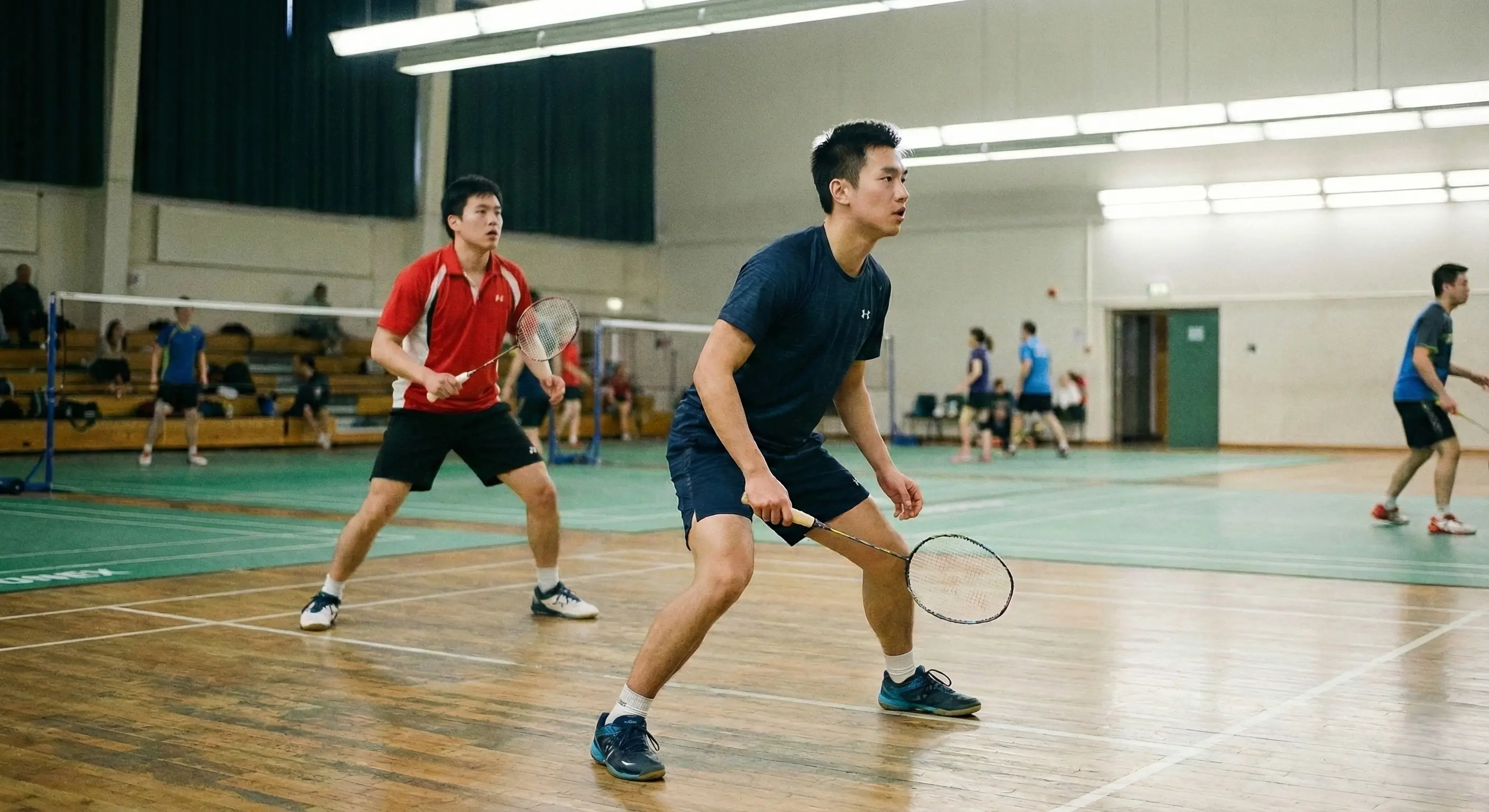
The Illusion of "Natural Talent"
When we watch professionals, our brains trick us. We see the result (effortless movement) and assume it's caused by physical gifts (speed, reflexes). But if you slow down the footage, you notice something different:
- They start moving before the shuttle crosses the net.
- They are already in position when the shuttle arrives.
- Their swing is relaxed because they aren't reaching.
This is called anticipation, and it is the single biggest difference between levels.
Why Club Players Look Panicked
The Panic Cycle
- You watch your own shot → You don't see your opponent's preparation.
- You react late → The shuttle is already past the net when you start moving.
- You rush your swing → Poor contact, weak shot.
- Your opponent has more time → They attack you again.
- Repeat until exhausted.
This is why club players are always out of breath. They aren't actually running more; they are running inefficiently. Every movement is a desperate sprint instead of an economical glide.
The Secret: Stop Watching the Shuttle
Here is the counterintuitive advice that will change your game:
After you hit, don't watch the shuttle. Watch your opponent.
The shuttle will go where it goes. You can't change its trajectory after it leaves your racket. But you can gain 0.5 seconds by reading your opponent's body language:
- Are they setting up for a smash (racket back, body upright)?
- Are they reaching late (they'll probably lift)?
- Are they moving to the forehand or backhand?
This early information allows you to pre-move—take a step in the probable direction before the shuttle is even hit. That one step is the difference between calm and chaos.
Three Habits That Create "Calm"
Habit 1: The Split Step (Every Single Time)
Good players split step before every shot. Not sometimes. Every time. This small hop loads their muscles and puts them in a ready state. Club players often skip the split step when they feel they "know" where the shuttle is going—and they guess wrong 40% of the time.
Habit 2: Base Position Recovery
After every shot, pros immediately flow back towards the center. They don't admire their shot. They don't stand still. They are already moving before they see the result. This continuous motion is what creates the "effortless" look.
Habit 3: Breathing (Seriously)
When you panic, you hold your breath. When you hold your breath, your muscles tense. When your muscles tense, you move slower and tire faster. Good players exhale on contact (like a boxer punching). This forces relaxation and improves timing.
A Simple Drill to Practice Calm
Next time you play, try this challenge:
- After you hit any shot, immediately call out your opponent's position: "Back left!" or "Net!"
- This forces you to look at them instead of the shuttle.
- You will feel uncomfortable at first—but within 10 minutes, you will notice you are arriving earlier.
Conclusion
Looking "calm" on a badminton court isn't about fitness or talent. It's about information. The earlier you know where the shuttle is going, the less you have to rush. The less you rush, the less energy you waste. The less energy you waste, the longer you can play at a high level.
Stop watching the shuttle. Start watching your opponent. That's the secret.
Related Reading:
3 Footwork Habits to Win Rallies →